
C purlins vs Z purlins: which should you use?
Purlins are the light steel members that carry your roof and wall sheets. C and Z purlins look similar, but they are used in different ways.
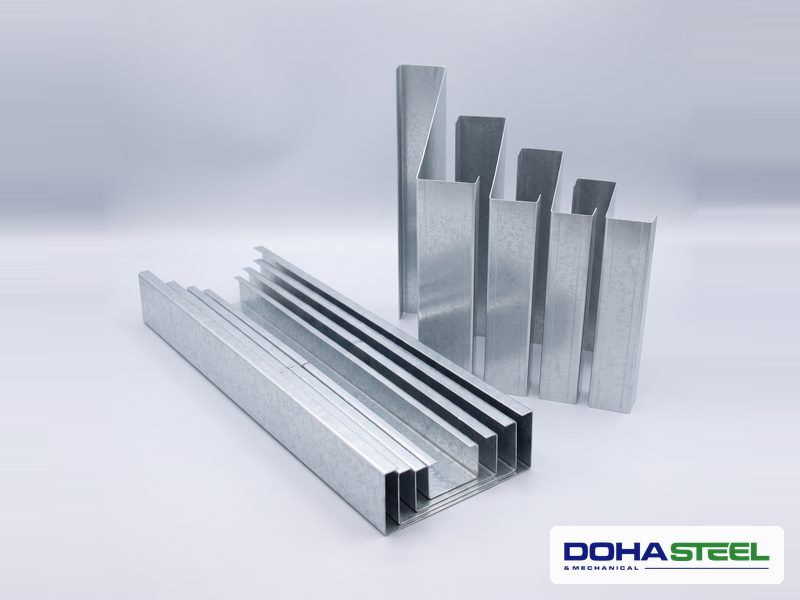
The difference in shape
A C purlin has both flanges pointing the same way, like the letter C. A Z purlin has its flanges pointing in opposite directions, like the letter Z. That small difference changes how they are joined and how far they can span.
| C purlin | Z purlin | |
|---|---|---|
| Joining | Butted end to end at each support | Overlapped (nested) at supports |
| Spans | Shorter, single spans | Longer, continuous runs |
| Typical use | Small sheds, canopies, wall girts, door and window framing | Warehouses and larger roofs |
| Handling | Simple to fix and cut | Nests together for transport and storage |
Why Z purlins can span further
Because one Z purlin can slide over the next at each support, the overlap acts like a continuous beam. That makes the run stiffer, so supports can be further apart on bigger buildings.
Why galvanised?
Purlins sit under the roof where heat and humidity are high. A galvanised zinc coating protects the steel from rust without painting, which matters in Qatar's climate.
Before you order
- The depth of purlin your drawing or engineer specifies, for example 150 or 200 mm
- The thickness, commonly between 1.5 and 3 mm
- The length of each piece, and how many you need
- Whether you need them plain or punched for bolting
For anything structural, follow your engineer's drawing for size and spacing. We will match the sections to what is specified.
Need a price?
Call us or visit the store at Al Najma Souq. We'll check stock and give you a price on the spot.