
Steel sheets explained: chequered plate, expanded metal, GI and hot rolled
Steel sheets come in several types, and the wrong one can mean a slippery stair or a rusty panel. Here is what each one is best for.
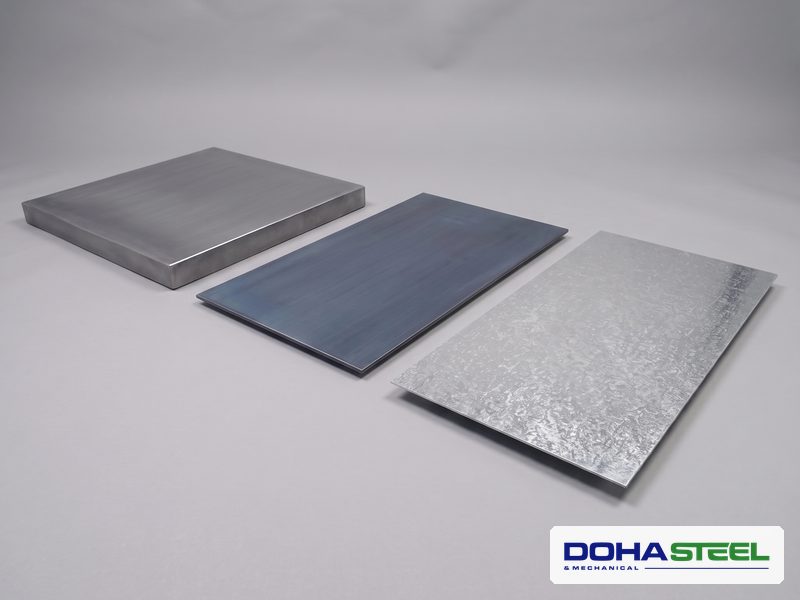
| Sheet | What it is | Best for |
|---|---|---|
| Chequered plate | Steel plate with a raised diamond pattern | Stairs, ramps, walkways, truck floors: anywhere people need grip |
| Expanded metal | A sheet cut and stretched into a diamond mesh | Grilles, guards, fences, shelving and walkways that let air and light through |
| Galvanised (GI) sheet | Thin steel coated with zinc | Ducting, cladding, flashings and outdoor work that must resist rust |
| Hot rolled (HR) sheet | Plain black steel sheet | Fabrication, base plates, tanks and parts that will be painted |
Chequered plate
The raised pattern gives a grip underfoot even when the surface is dusty or wet. Thickness is usually given as the plate thickness, not including the pattern.
Expanded metal
Because it is one piece of metal stretched open, there are no welds to break. It is lighter than a solid sheet of the same size and still strong.
GI sheet
The zinc coating protects the steel outdoors without paint. Choose GI for anything exposed to weather or moisture.
Hot rolled sheet
The most economical choice for fabrication. It needs primer and paint if it will be outside.
Sizes
The most common full sheet size is 1220 × 2440 mm (4 × 8 ft). Bring the thickness and number of sheets you need, or ask us to cut to size.
Need a price?
Call us or visit the store at Al Najma Souq. We'll check stock and give you a price on the spot.